
Maine Coon FAQ
Common questions and answers about these gentle giants.
-
We LOVE and recommend the following products:
Pet Carrier for Pickup/Travel: https://amzn.to/4as32rd
Pet Feed/Water Container: https://amzn.to/4bxdPl4
High Protein Kitten Food: https://amzn.to/49U2PwT or https://amzn.to/46mzGYR
Cat Bed: https://amzn.to/4qe2dab
Gut Health: https://amzn.to/4tiTRAS
Outdoor Tracking (Never lose your Maine Coon!): https://amzn.to/46yS4xJ
Cleanup
Litter Robot: https://amzn.to/3OhS8M0
Litter for Litter Robot: https://amzn.to/4rjXV22
Non Smart Litter Box Option: https://amzn.to/4qwsXTH
Wood Litter, Clumping (this is my favorite!)-https://amzn.to/4sbqQoQ
Toys
Play Tunnel/Scratcher: https://amzn.to/4qe2dab
Grooming
Grooming Tool (MUST have): https://amzn.to/4teCEaQ
Dematting Tool: https://amzn.to/4tfULNK
-
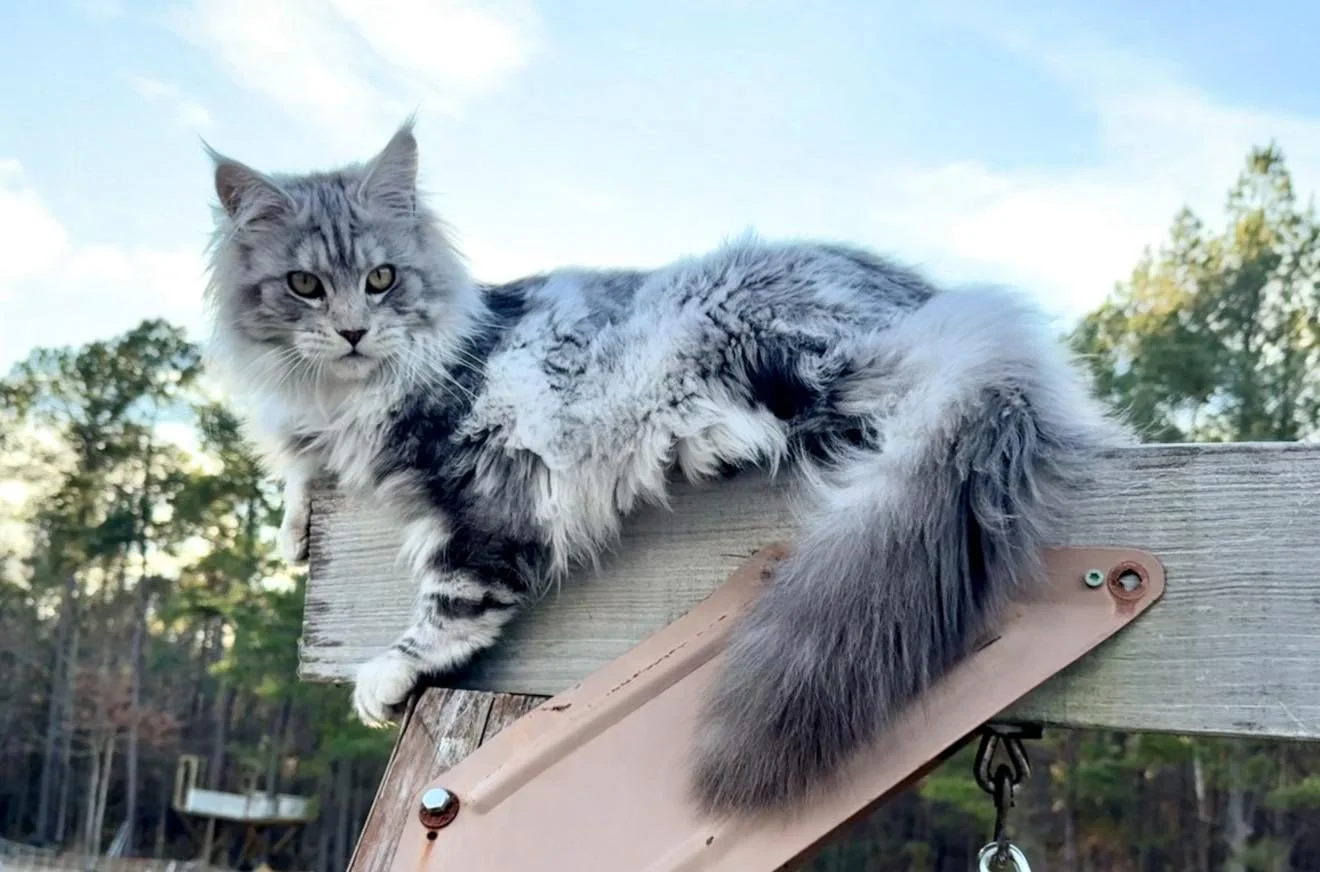
Maine Coons are one of the largest domesticated cat breeds. Males typically weigh 13–20 lbs (sometimes up to 25+ lbs), females 8–15 lbs. They measure 10–16 inches tall at the shoulder and can reach 30–40 inches in length (including tail).
-
Known as "gentle giants," they are friendly, affectionate, social, intelligent, and playful. Most love people, get along with dogs and other pets, enjoy fetch and water, and are often described as dog-like in behavior.
-
They are active and playful into old age. Provide cat trees, interactive toys, puzzle feeders, and daily play sessions.
-
Yes — they have a thick, water-repellent double coat. They shed moderately year-round with heavier shedding twice a year but it is manageable with regular brushing (2–3 times/week).
-
Average lifespan is 12–15 years, with many reaching 18+ years with good care, genetics, and regular vet visits.
-
Yes — they are quite chatty! They trill, chirp, and make soft meows rather than loud yowls.
-
Hypertrophic cardiomyopathy (HCM), hip dysplasia, and spinal muscular atrophy (SMA). Rest assured we have genetically tested all of our breeding kings and queens, and they are negative for all of these genetic issues.
-
Maine Coons are slow maturers, and their full mane (ruff) develops gradually.
Under 6–9 months: Little to no mane — just soft kitten fur.
9–18 months: The mane starts to appear, usually subtle at first.
2–4 years: The impressive, thick mane typically fully develops — males often get the fullest ruffs. Most reach peak coat by 3–5 years, looking thicker in winter.
Genetics and bloodlines play a big role: some cats show a nice ruff earlier, others take longer. Patience is key — the lion-like look comes with time!